Earth and Planetary Sciences News
How Enceladus' ocean spray becomes chemically diverse ice grains
Cassini data and laboratory experiments reveal how slow freezing and fragmentation may separate salts and organics in ejected material
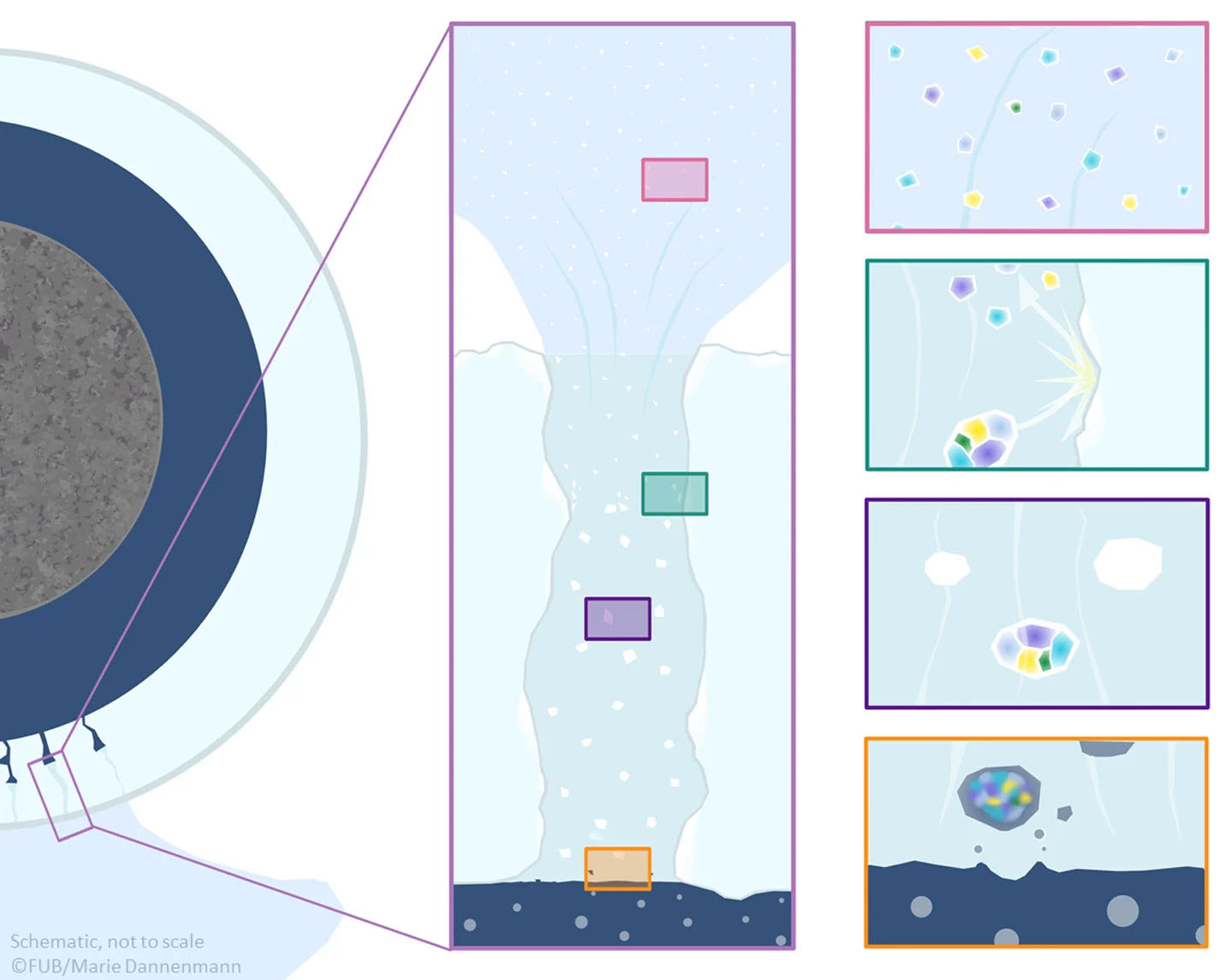
Saturn's icy moon Enceladus hides a global ocean beneath its frozen surface. From fractures near its south pole, material from this ocean is ejected into space as a plume of water vapour and ice particles. These particles offer scientists a rare opportunity to investigate an extraterrestrial ocean without drilling through kilometres of ice.
Featured News
-

2026.07.27
-

2026.06.05
-
2026.03.19